
How to Prevent Ingrown Hairs After Shaving
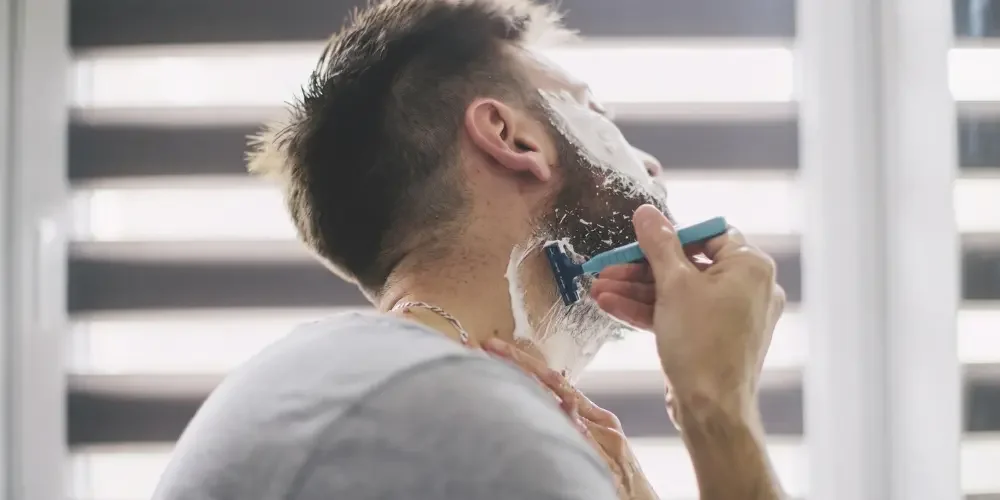
You know the shave went wrong when your neck looks fine that morning and angry two days later.
A few red bumps show up. One gets sore. Another has a hair trapped under the skin. Then the temptation is to dig at it with tweezers, which usually turns one annoying bump into a bigger problem.
If you want to prevent ingrown hairs after shaving, look at the whole shave: how you prep the hair, the razor you use, the direction you shave, how many passes you make, and what you do afterward.
What Causes Ingrown Hairs?
An ingrown hair happens when a cut hair grows back into the skin instead of out through the follicle. The body treats that trapped hair like an irritant, which can cause redness, swelling, tenderness, and sometimes a small pus-filled bump.
Shaving very close increases the chance because the hair can retract below the skin surface. Curly or coarse beard hair is especially prone to curving back into the skin.
Who Gets Ingrown Beard Hairs Most Often?
Anyone can get them, but they are more common with coarse, curly beards and on the neck where growth changes direction.
The neck is tricky because hair rarely grows in one neat downward pattern. It can point sideways near the jaw, swirl around the Adam's apple, then change direction again lower down. If you automatically shave straight upward against all of that growth, razor bumps are much more likely.
How to Prevent Ingrown Hairs After Shaving
1. Learn your growth pattern first
Before you put a blade on your face, look at how the beard actually grows. Let it grow for a day or two and run your hand over it. The direction that feels smoother is generally with the grain.
That direction may change from one part of your neck to another. Shave the section, not the whole face, according to one imaginary map.
2. Soften the beard
Warm water helps soften coarse facial hair. Shaving after a shower is easy because the beard has already had time to hydrate. Otherwise, wash the area with warm water and a gentle cleanser before shaving.
3. Use enough shaving cream
A thin dry layer is not doing much. Use enough product to give the blade slip and let it sit briefly before the first pass. That reduces dragging and repeated scraping.
4. Use a sharp, clean razor
If the blade tugs, skips, or needs pressure to cut, it is done. A dull blade encourages multiple passes and irritation. The American Academy of Dermatology also recommends changing disposable blades regularly rather than stretching them forever.
5. Shave with the grain
Against-the-grain shaving feels incredibly smooth for a few hours because it cuts hair very close. That closeness is also exactly what can create trouble for someone prone to ingrowns.
Start with the grain. If you need a closer result, a second across-the-grain pass may be enough without going directly against growth.
6. Stop stretching the skin
Pulling the skin tight lets the razor cut the hair below the natural surface. When the skin relaxes, that short hair can sit under the opening of the follicle. Great recipe for a bump. Bad goal.
7. Let the razor do the work
You should not be pushing the blade into your face. Use light pressure and short strokes. Rinse the blade often so hair and shaving cream do not clog it.
A Better Shaving Routine for Sensitive Skin
| Step | What to do |
|---|---|
| Before | Warm water, gentle cleanser, and a few minutes to soften coarse hair |
| During | Sharp blade, shaving cream, light pressure, shave with growth |
| After | Cool rinse, gentle moisturizer, no picking or aggressive scrubbing |
| Between shaves | Keep skin clean, exfoliate gently if tolerated, give irritated areas time |
Should You Exfoliate Before or After Shaving?
Gentle exfoliation can help keep dead skin from blocking the follicle, but timing and intensity matter. Scrubbing an already irritated neck right after a close shave can make it angrier.
If your skin tolerates exfoliation, use a mild option on non-irritated skin. Sensitive skin usually does better with less enthusiasm.
Razor Burn vs. Ingrown Hairs
| Razor burn | Ingrown hair |
|---|---|
| Often appears quickly after shaving | Often develops as hair starts growing back |
| Diffuse redness or burning | Individual raised bumps around follicles |
| Caused by friction and irritation | Caused by hair growing into the skin |
| Usually settles with gentler skin care | May persist until the hair grows out or is released naturally |
How to Treat an Ingrown Hair Safely
First: stop digging.
If the bump is mild, pause close shaving over the area, keep it clean, and use warm compresses to soften the skin. Gentle exfoliation may help the hair surface over time. Do not cut the skin open or go hunting for the hair with a needle.
If you can clearly see a loop of hair at the surface, a medical professional can advise on safe release. If the area becomes increasingly painful, hot, swollen, drains pus, or redness spreads, get medical care because infection is possible.
Common Shaving Mistakes That Cause Razor Bumps
Shaving against the grain every time.
Using a dull blade because “it still kind of works.”
Going over the same area five or six times.
Pressing too hard.
Dry shaving coarse hair.
Stretching the skin for an ultra-close finish.
Applying strong alcohol-based products to already irritated skin.
Picking at bumps between shaves.
When a Professional Shave Can Help
At Salt City Barbershop, we can read the grain pattern, prep coarse hair properly, and avoid chasing closeness in the exact spots that are already irritated. If your neck gets bumps every time you shave at home, bring that up before the service. We would rather adjust the shave than make your skin look perfect for six hours and miserable for six days.
Final Tips for a Smoother Shave
The best shaving routine is not the closest shave physically possible. It is the closest shave your skin can tolerate without fighting you afterward.
Prep the beard. Use a sharp blade. Follow the grain. Moisturize. And stop trying to shave irritated skin into submission.
If you want a professional shave or help figuring out what your beard is doing on the neck, come see us at Salt City Barbershop.
Frequently Asked Questions
Why do I get ingrown hairs after shaving?
The cut hair can curl or grow back into the skin, especially when hair is coarse or curly and has been shaved very close.
Is it better to shave with or against the grain?
If you are prone to ingrown hairs, start with the grain. Against-the-grain shaving cuts closer but can increase irritation and trapped hairs.
How do I prevent razor bumps on my neck?
Map the neck's growth direction, soften the hair, use a sharp blade, shave lightly with the grain, and avoid stretching the skin.
Should I exfoliate before or after shaving?
Gentle exfoliation on non-irritated skin can help, but aggressive exfoliation right after a close shave may worsen irritation.
When should I see a dermatologist?
See one if bumps are persistent, painful, infected, causing dark marks or scars, or are not improving despite a gentler routine.